Volkswind has been passionately developing, financing and realising wind farms throughout Europe for 30 years. From the initial idea to commissioning, we take on all tasks in the process chain.
Together with our partners, we make the energy transition possible. In doing so, we rely on a long-standing, trusting cooperation with land owners, municipalities and business partners.
Volkswind has been passionately developing, financing and realising wind farms throughout Europe for 30 years. From the initial idea to commissioning, we take on all tasks in the process chain.
Together with our partners, we make the energy transition possible. In doing so, we rely on a long-standing, trusting cooperation with land owners, municipalities and business partners.
Bladelifter at the Kirchhundem project: Precision work in difficult terrain
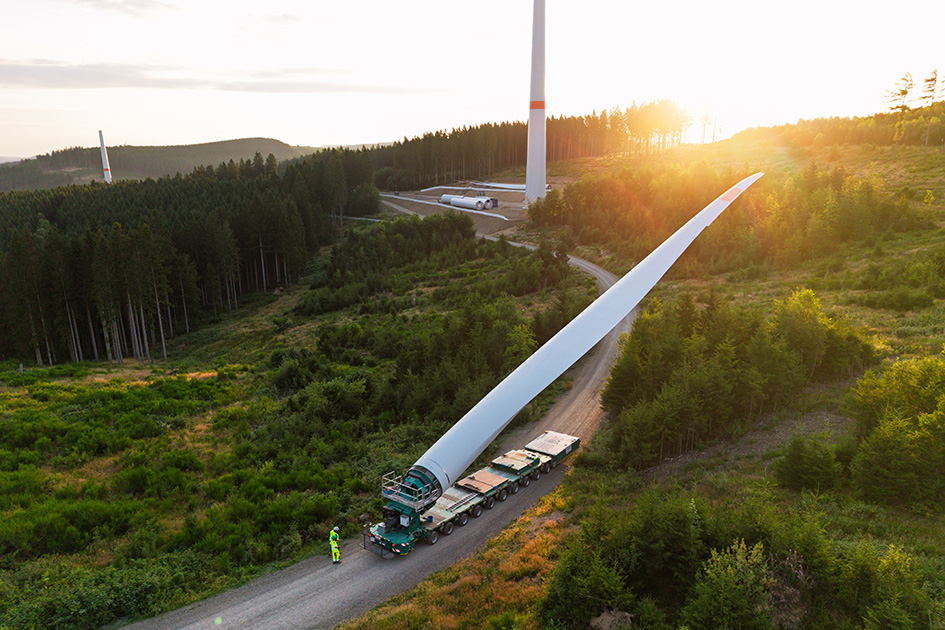
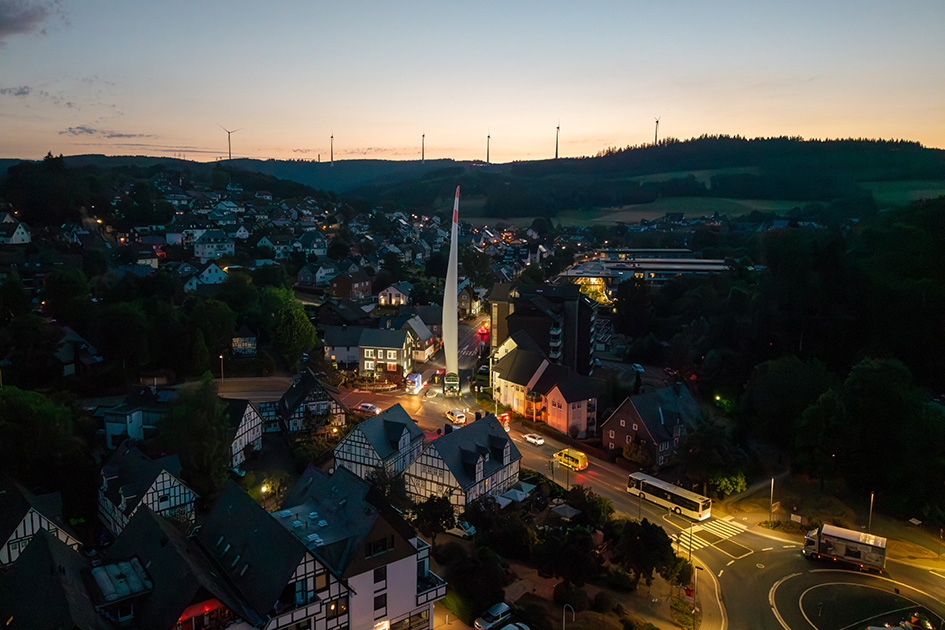
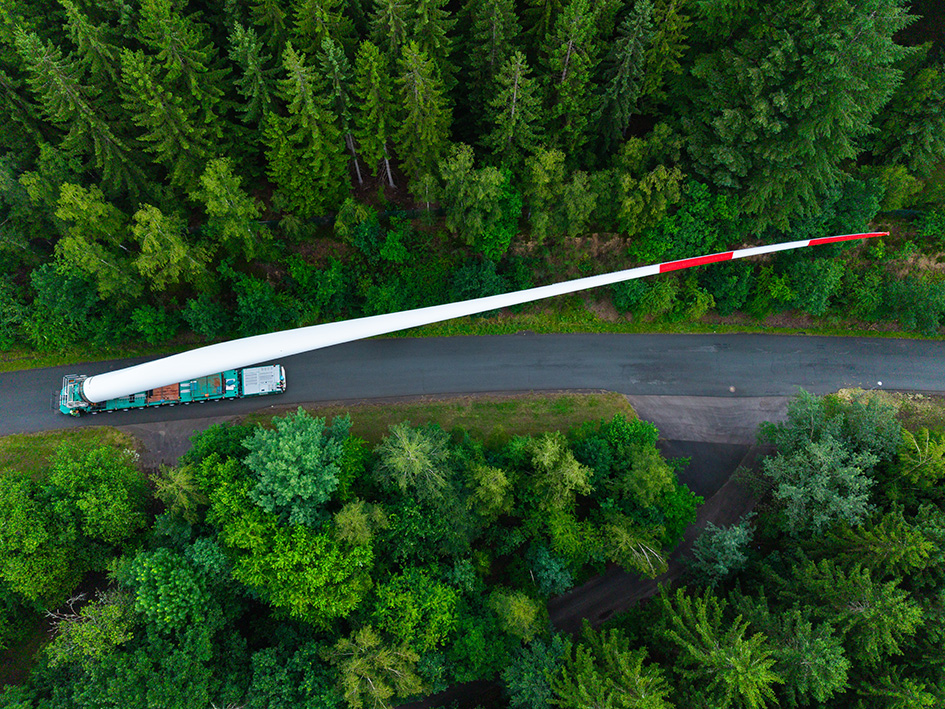
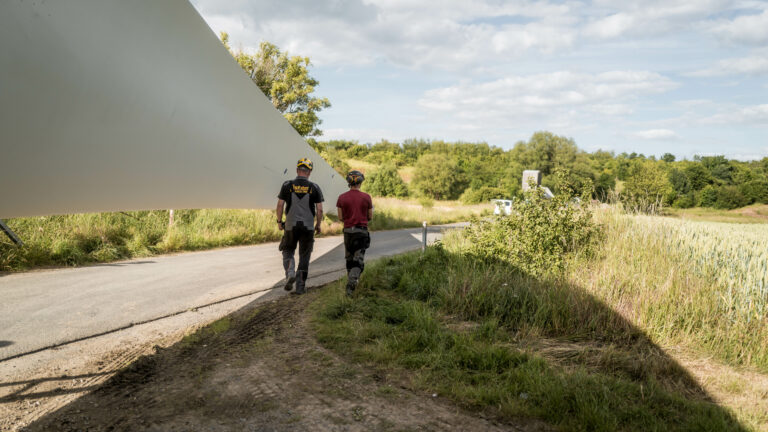
Transporting blades for wind turbines through Germany’s Rothaar Mountains is an engineering challenge in which every metre counts. Tight bends, steep inclines and limited space leave little room for error. Using a so-called bladelifter, which Volkswind is deploying for the first time, the 75-metre-long blades can be rotated into different positions, allowing the challenging terrain to be traversed safely.
A so-called bladelifter is being used for the first time in Volkswind’s history at the Kirchhundem wind energy project. This specialist technology is being used to transport the rotor blades from a transshipment site through the challenging, topographically difficult terrain to the actual construction site.
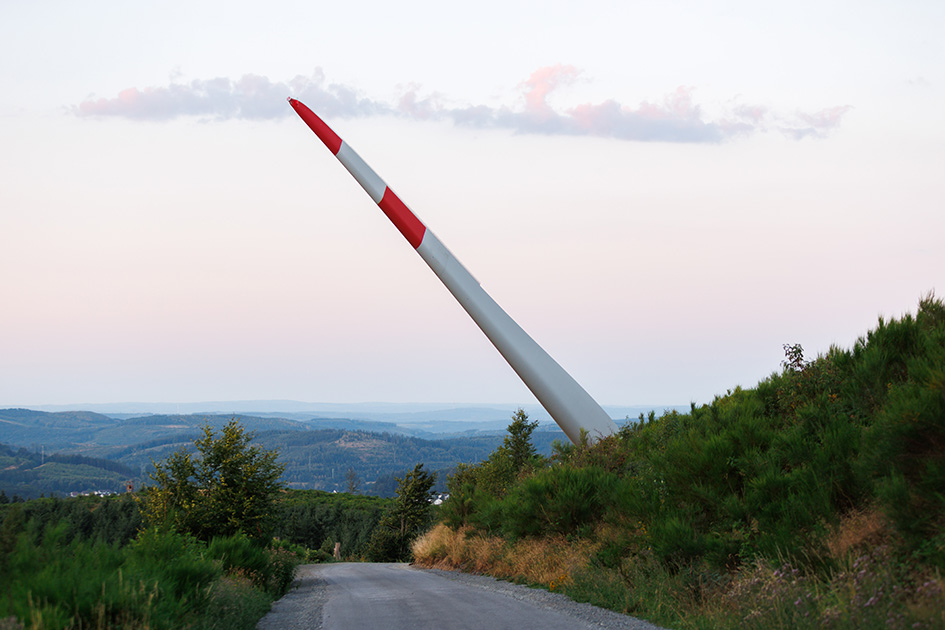
The transports are among the most technically impressive phases of the project. With the help of the bladelifter, each of the 75-metre-long rotor blades can be lifted and deliberately tilted while in transit. This makes it possible to negotiate tight bends, steep inclines and restricted spaces that could not be passed with conventional transport vehicles—or only with considerable additional effort.
This flexibility is particularly important in the hilly region around Kirchhundem. The use of the bladelifter makes it possible to use the existing infrastructure and keep interventions in the landscape and road network to a minimum.
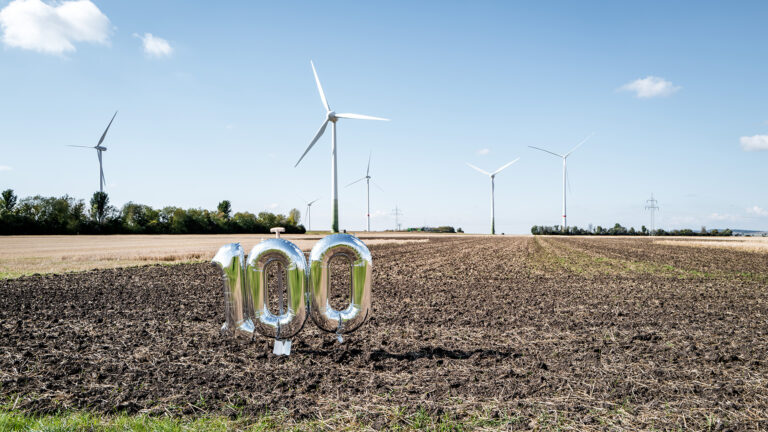
The Kirchhundem wind farm comprises a total of five Vestas V150 wind turbines, each with an individual capacity of 6 megawatts. With a rotor diameter of 150 metres, a hub height of 169 metres and an expected output of around 58 million kilowatt-hours, the project will eventually supply electricity to approximately 14,500 four-person households.
defaultdefault
Explained briefly: Why are bladelifters used for transport?
The rotor blades of modern wind turbines are now more than 80 metres long. Transporting such components is a particular challenge, especially in hilly or forested terrain.
Bladelifters are used in these situations because they can:
Actively lift and tilt rotor blades: The blade is hydraulically rotated to navigate obstacles, embankments and tight bends.
Enable transport on existing roads: Extensive road upgrades or large-scale clearing can often be avoided.
Increase logistical safety: Critical sections of the route can be travelled in a controlled manner and at a reduced speed.
Make construction processes more predictable: Even in difficult terrain, transport operations remain manageable in terms of both scheduling and technology.
The use of bladelifters is therefore an important tool for enabling modern wind turbines to be built at challenging sites. A bladelifter is also being used at the Burbach II wind farm, which is currently under construction a few kilometres away.
To provide the best experiences, we use technologies like cookies to store and/or access device information. Consenting to these technologies will allow us to process data such as browsing behavior or unique IDs on this site. Not consenting or withdrawing consent, may adversely affect certain features and functions.
Fonctionnal
Always active
The technical storage or access is strictly necessary for the legitimate purpose of enabling the use of a specific service explicitly requested by the subscriber or user, or for the sole purpose of carrying out the transmission of a communication over an electronic communications network.
Préférences
L’accès ou le stockage technique est nécessaire dans la finalité d’intérêt légitime de stocker des préférences qui ne sont pas demandées par l’abonné ou l’internaute.
Statistics
The technical storage or access that is used exclusively for anonymous statistical purposes. Without a subpoena, voluntary compliance on the part of your Internet Service Provider, or additional records from a third party, information stored or retrieved for this purpose alone cannot usually be used to identify you.Le stockage ou l’accès technique qui est utilisé exclusivement dans des finalités statistiques anonymes. En l’absence d’une assignation à comparaître, d’une conformité volontaire de la part de votre fournisseur d’accès à internet ou d’enregistrements supplémentaires provenant d’une tierce partie, les informations stockées ou extraites à cette seule fin ne peuvent généralement pas être utilisées pour vous identifier.
Marketing
The technical storage or access is required to create user profiles to send advertising, or to track the user on a website or across several websites for similar marketing purposes.