Could you introduce yourself and your commune?
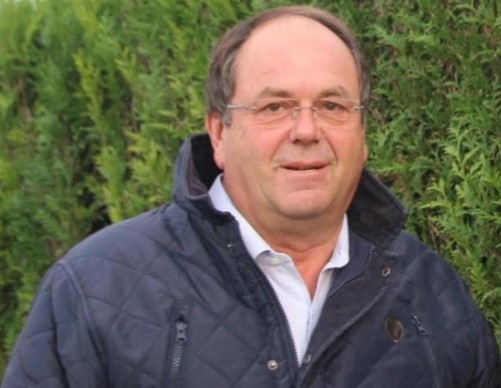
I'm an agricultural engineer from ISA in Lille, I'm a farmer, my farm is in Levergies. I was a public works contractor and just sold my company. Finally, I'm the mayor of Levergies. The commune has 555 inhabitants and is part of the Pays du Vermandois community of communes.
Levergies is essentially rural, with just one industrial mechanical engineering company operating there. This is my second term as mayor. Before that I was a local councillor.
What is your role within the local authority?
My role is to look after the commune's finances and manage the commune's staff. I'm president of the school union because we have a school grouping of 3 communes, with 100 pupils. As chairman of the school union, I manage relations between the teachers and the parents, as well as managing the canteen.
Why host a wind farm in your area?
The project was adopted by the previous town council, of which I was a member. But personally I preferred to withdraw from each meeting because I risked being a stakeholder in this project and to avoid any illegal taking of interest.
In the end, I don't have any wind turbines on my land, so I'm much calmer about managing this.
It's quite simple: we're surrounded by wind farms, so we thought why not come here? In particular, because of the financial spin-offs for our budget, it would allow us to look to the future with peace of mind in terms of the commune's finances.
Did the Town Council sign up to the project straight away? Were there any votes against?
It was very straightforward when the investigating commissioner came and there were two comments in the investigating commissioner's notebook: one in favour of wind turbines and the other just asking for technical details. There were no protests, no petitions, no articles in the press, nothing at all. There was more indifference on the part of local councillors and residents than anything else.
How has the project been received in the community?
I immediately saw the benefits of upgrading all our farm tracks. We're in a beet-growing region, so there's a lot of beet transport in the autumn and winter. The roads that have been created mean that the beet lorries don't have to pass through the village. It was a great satisfaction for the residents to know that the lorries would no longer pass through the village thanks to the paths created to access the wind farm.
Some of the farm tracks have also been rebuilt, making it easier for farmers to access their plots of land, and for walkers too, as the new footpaths are also used by cyclists.
What was your relationship with Volkswind during the project?
The project went well with the various people at Volkswind, and they accommodated all our requests, of which there weren't many. We asked for a path to be extended to make a circuit and we asked to be able to keep the site's life base as it was to make a car park for our cemetery.
How did this wind farm fit in with your surroundings?
The site is not yet finished, the wind turbines are still being erected. But there are some, on the right, on the left, at the back, one more or one less is not too noticeable.
What projects or work have been carried out thanks to the arrival of wind turbines?
We're planning to build a compact city stadium for schoolchildren and young people to play football, basketball and volleyball, and we've also planted around 600 trees on the commune's somewhat disused land. We're also planning to build a small housing estate, and the financial benefits from the wind farm will enable us to finance the access roads to the 3/4 houses that will welcome new families to the commune.
Have there been any other spin-offs, on the local economy for example?
There are all the local companies, the diggers and hauliers who fetch the gravel from quarries in the north. There's a breezeblock and concrete company right next door that supplied all the concrete for the wind turbine frames.
It's had a huge impact on the local economy, whatever our regional president, who is against wind turbines, might say.
What would you say to other mayors about your experience with wind turbines?
I'd say that I haven't had any particular problems with Volkswind, nor with the company that did all the earthworks and construction work. This wind farm will be a major source of income for our commune in these times of crisis. We're also contributing to the renewable energy effort, but to be honest, it's more about the financial aspect than the environmental one.